The Future of Cross-Border Payments in Africa
Posted on 17/02/2026 18:52:38
Audience: 93
Share with friends on:
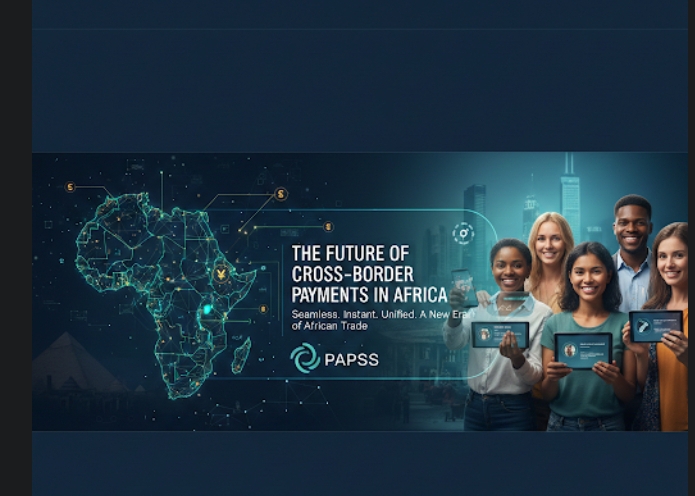
The future of cross-border payments in Africa is undergoing a radical shift from a fragmented, expensive landscape to a streamlined, digital-first ecosystem driven by unprecedented regulatory alignment. For decades, intra-African trade was hampered by a heavy reliance on offshore intermediary banks and the U.S. dollar, which inflated costs and extended settlement times to several days. However, as of 2026, the Pan-African Payment and Settlement System (PAPSS) has emerged as a cornerstone of the African Continental Free Trade Area (AfCFTA), enabling real-time transactions in local currencies. By bypassing the need for third-party international clearinghouses, this infrastructure is estimated to save the continent billions of dollars annually in transaction fees while reducing the pressure on foreign exchange reserves for central banks.
This structural evolution is being further accelerated by a "hybrid" model of finance where traditional banking rails and fintech innovations converge. While commercial banks are modernizing their core settlement systems to support ISO 20022 standards, fintech companies are leading the charge in usability and "agentic commerce," where AI-driven tools manage transaction flows and liquidity for small and medium enterprises. We are seeing the rise of currency-agnostic platforms that allow a merchant in Lagos to send a payment that arrives as mobile money in Nairobi within seconds. These platforms increasingly utilize regulated stablecoins and tokenized deposits to facilitate instant liquidity, particularly in corridors where local currency volatility remains high.
The success of this new era depends heavily on the transition from "growth at all costs" to "growth through trust" and robust compliance. With real-time payments comes real-time risk, prompting the integration of AI-assisted Anti-Money Laundering (AML) and sanctions screening directly into the payment flow. As digital wallets and mobile money account for an even larger share of online and offline transactions, the focus has shifted toward harmonizing "Know Your Customer" (KYC) rules across borders. This enables informal traders and small businesses—who were previously excluded from the formal financial system—to participate in a unified market that is projected to exceed $1 trillion in value by 2035.
Ultimately, the future of African payments is moving toward a state of "invisible finance" where cross-border friction becomes a relic of the past. As more central banks join regional switches and interlink their instant payment systems, the continent is building a resilient, sovereign financial infrastructure that reflects its unique mobile-first economy. This transformation does more than just move money; it provides the essential plumbing for a truly integrated Africa, allowing capital to flow as freely as goods and services under the AfCFTA, thereby fostering long-term economic resilience and shared prosperity across all 54 nations.
This structural evolution is being further accelerated by a "hybrid" model of finance where traditional banking rails and fintech innovations converge. While commercial banks are modernizing their core settlement systems to support ISO 20022 standards, fintech companies are leading the charge in usability and "agentic commerce," where AI-driven tools manage transaction flows and liquidity for small and medium enterprises. We are seeing the rise of currency-agnostic platforms that allow a merchant in Lagos to send a payment that arrives as mobile money in Nairobi within seconds. These platforms increasingly utilize regulated stablecoins and tokenized deposits to facilitate instant liquidity, particularly in corridors where local currency volatility remains high.
The success of this new era depends heavily on the transition from "growth at all costs" to "growth through trust" and robust compliance. With real-time payments comes real-time risk, prompting the integration of AI-assisted Anti-Money Laundering (AML) and sanctions screening directly into the payment flow. As digital wallets and mobile money account for an even larger share of online and offline transactions, the focus has shifted toward harmonizing "Know Your Customer" (KYC) rules across borders. This enables informal traders and small businesses—who were previously excluded from the formal financial system—to participate in a unified market that is projected to exceed $1 trillion in value by 2035.
Ultimately, the future of African payments is moving toward a state of "invisible finance" where cross-border friction becomes a relic of the past. As more central banks join regional switches and interlink their instant payment systems, the continent is building a resilient, sovereign financial infrastructure that reflects its unique mobile-first economy. This transformation does more than just move money; it provides the essential plumbing for a truly integrated Africa, allowing capital to flow as freely as goods and services under the AfCFTA, thereby fostering long-term economic resilience and shared prosperity across all 54 nations.
Kindly join discussion on this topic on:
} Share with friends on:Related Posts
- Conversational Keywords: Writing for Natural Language Processing
- Trade Resilience: Data on Front-Loaded Shipments and New Bilateral Trade Deals
- Venture Capital in 2026: The Shift from "Growth at All Costs" to "Unit Economics"
- What Is the Force Majeure Clause Released in Bahrain Amidst the US-Israeli-Iranian Conflict
- E-Commerce Integration: Taking Your Local Trade to a Global Audience
- Authoritative Content: How to Become a Primary Source for AI Models
- Interoperability: Connecting Private Blockchains with Public Liquidity
- Smart Cities or Gated Communities? The Social Impact of Tech-Driven Urban Planning
- Social Listening for ROI: How to Spot Market Trends Before They Break
- Agricultural Yields: Impact of Climate-Related Shocks on Global Food Security