The Evolution of Mobile Money in Nigeria
Posted on 14/02/2026 19:19:00
Audience: 123
Share with friends on:
The Evolution of Mobile Money in Nigeria
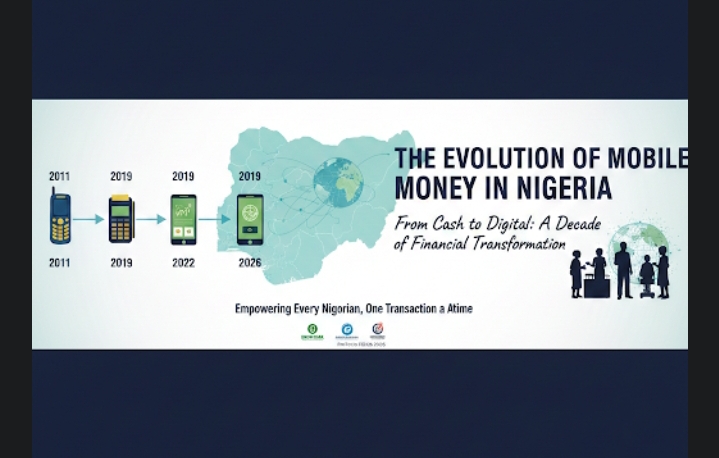
The journey of mobile money in Nigeria began as a regulatory vision to bridge the massive gap between the banked and unbanked populations. In 2011, the Central Bank of Nigeria (CBN) introduced the first set of mobile money guidelines, favoring a "bank-led" model. Unlike the rapid, telecom-led success seen with M-Pesa in Kenya, Nigeria’s early evolution was deliberate and cautious. Initial adoption was slow as traditional banks struggled to extend their reach into rural areas, and the infrastructure for a robust agent network—the backbone of any mobile money ecosystem—was still in its infancy.
As the 2010s progressed, the landscape shifted with the introduction of the National Financial Inclusion Strategy. This era saw the rise of independent fintech pioneers like Paga and OPay, which began to challenge the bank-centric status quo. These platforms focused on the "last mile," empowering local shopkeepers to become human ATMs. By 2019, the surge in Point-of-Sale (POS) technology transformed Nigerian streets, making digital transfers and cash-out services accessible even in neighborhoods without a single bank branch. This phase marked the transition of mobile money from a niche technical tool to a daily survival utility for millions of traders and artisans.
A pivotal turning point occurred in 2022 when the CBN granted Payment Service Bank (PSB) licenses to major telecommunications giants like MTN and Airtel. This "telecom-led" revolution allowed operators to leverage their massive existing subscriber bases to provide financial services. By utilizing simple USSD codes, they brought banking to the pockets of Nigerians using basic feature phones, not just smartphones. This move addressed a critical barrier: the digital divide. By removing the need for internet data to perform basic transactions, mobile money penetration finally began to scale at a pace that matched the country's population growth.
By 2024 and 2025, the ecosystem matured into a "cash-lite" reality, further accelerated by the 2023 naira redesign policy which forced many skeptics into the digital fold. Real-time payment rails, managed by the Nigeria Inter-Bank Settlement System (NIBSS), became world-class, supporting billions of instant transactions annually. Fintechs evolved beyond simple transfers, integrating micro-insurance, "Buy Now, Pay Later" (BNPL) schemes, and automated savings into their mobile wallets. This era solidified the mobile phone as the primary financial interface for the average Nigerian, significantly reducing reliance on physical bank halls.
In the current landscape of 2026, mobile money has moved toward total integration and interoperability. The distinction between a "bank account" and a "mobile wallet" has blurred, with most Nigerians managing their finances across multiple digital platforms seamlessly. The focus has now shifted to advanced security and consumer trust. With the implementation of more robust biometric verification and AI-driven fraud detection, the system is more resilient than ever. According to recent reports, financial inclusion has climbed toward the 95% target, driven largely by the ubiquity of mobile-first financial solutions that cater to the informal economy.
Looking ahead, the evolution continues with a focus on cross-border payments and the integration of the eNaira within mobile money apps. As Nigeria positions itself as a global fintech hub, the mobile money story serves as a blueprint for other emerging markets. It demonstrates that while technology is the engine, regulatory flexibility and grassroots agent networks are the fuel that drives true financial empowerment. Today, mobile money is no longer just a project; it is the heartbeat of the Nigerian economy, ensuring that whether in a bustling Lagos market or a remote village in Jigawa, every Nigerian is just a few keystrokes away from the global financial system.
The journey of mobile money in Nigeria began as a regulatory vision to bridge the massive gap between the banked and unbanked populations. In 2011, the Central Bank of Nigeria (CBN) introduced the first set of mobile money guidelines, favoring a "bank-led" model. Unlike the rapid, telecom-led success seen with M-Pesa in Kenya, Nigeria’s early evolution was deliberate and cautious. Initial adoption was slow as traditional banks struggled to extend their reach into rural areas, and the infrastructure for a robust agent network—the backbone of any mobile money ecosystem—was still in its infancy.
As the 2010s progressed, the landscape shifted with the introduction of the National Financial Inclusion Strategy. This era saw the rise of independent fintech pioneers like Paga and OPay, which began to challenge the bank-centric status quo. These platforms focused on the "last mile," empowering local shopkeepers to become human ATMs. By 2019, the surge in Point-of-Sale (POS) technology transformed Nigerian streets, making digital transfers and cash-out services accessible even in neighborhoods without a single bank branch. This phase marked the transition of mobile money from a niche technical tool to a daily survival utility for millions of traders and artisans.
A pivotal turning point occurred in 2022 when the CBN granted Payment Service Bank (PSB) licenses to major telecommunications giants like MTN and Airtel. This "telecom-led" revolution allowed operators to leverage their massive existing subscriber bases to provide financial services. By utilizing simple USSD codes, they brought banking to the pockets of Nigerians using basic feature phones, not just smartphones. This move addressed a critical barrier: the digital divide. By removing the need for internet data to perform basic transactions, mobile money penetration finally began to scale at a pace that matched the country's population growth.
By 2024 and 2025, the ecosystem matured into a "cash-lite" reality, further accelerated by the 2023 naira redesign policy which forced many skeptics into the digital fold. Real-time payment rails, managed by the Nigeria Inter-Bank Settlement System (NIBSS), became world-class, supporting billions of instant transactions annually. Fintechs evolved beyond simple transfers, integrating micro-insurance, "Buy Now, Pay Later" (BNPL) schemes, and automated savings into their mobile wallets. This era solidified the mobile phone as the primary financial interface for the average Nigerian, significantly reducing reliance on physical bank halls.
In the current landscape of 2026, mobile money has moved toward total integration and interoperability. The distinction between a "bank account" and a "mobile wallet" has blurred, with most Nigerians managing their finances across multiple digital platforms seamlessly. The focus has now shifted to advanced security and consumer trust. With the implementation of more robust biometric verification and AI-driven fraud detection, the system is more resilient than ever. According to recent reports, financial inclusion has climbed toward the 95% target, driven largely by the ubiquity of mobile-first financial solutions that cater to the informal economy.
Looking ahead, the evolution continues with a focus on cross-border payments and the integration of the eNaira within mobile money apps. As Nigeria positions itself as a global fintech hub, the mobile money story serves as a blueprint for other emerging markets. It demonstrates that while technology is the engine, regulatory flexibility and grassroots agent networks are the fuel that drives true financial empowerment. Today, mobile money is no longer just a project; it is the heartbeat of the Nigerian economy, ensuring that whether in a bustling Lagos market or a remote village in Jigawa, every Nigerian is just a few keystrokes away from the global financial system.
Kindly join discussion on this topic on:
} Share with friends on:Related Posts
- Conversational Keywords: Writing for Natural Language Processing
- Trade Resilience: Data on Front-Loaded Shipments and New Bilateral Trade Deals
- Venture Capital in 2026: The Shift from "Growth at All Costs" to "Unit Economics"
- What Is the Force Majeure Clause Released in Bahrain Amidst the US-Israeli-Iranian Conflict
- E-Commerce Integration: Taking Your Local Trade to a Global Audience
- Authoritative Content: How to Become a Primary Source for AI Models
- Interoperability: Connecting Private Blockchains with Public Liquidity
- Smart Cities or Gated Communities? The Social Impact of Tech-Driven Urban Planning
- Social Listening for ROI: How to Spot Market Trends Before They Break
- Agricultural Yields: Impact of Climate-Related Shocks on Global Food Security