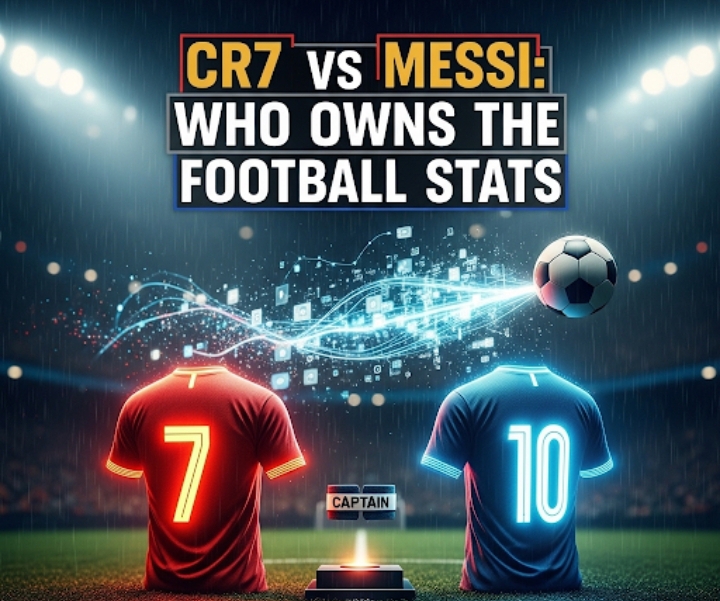
Ronaldo vs Messi: Who Owns the Football Stats
Posted on 26/02/2026 07:00:45
Audience: 128
Share with friends on:
Ronaldo vs Messi is the football debate that refuses to die, and in the age of data it has evolved into a battle of spreadsheets as much as a clash of styles. Cristiano Ronaldo has built a career on volume and relentlessness, racking up more than 960 senior goals for club and country and becoming the first player to surpass 1,300 professional appearances at the elite level, a testament to his physical durability and obsessive professionalism. Lionel Messi, meanwhile, has combined extraordinary output with artistry, amassing hundreds of goals and assists across Barcelona, Paris Saint‑Germain and now Inter Miami, while consistently ranking among the top creators in every league he has touched. For American fans used to comparing quarterbacks and NBA superstars by raw numbers, the temptation is to declare a winner based solely on totals—but with these two, the story behind the stats is just as important as the stats themselves.
If you focus on sheer goal scoring, Ronaldo often gets the edge. Across his time in England, Spain, Italy, Saudi Arabia and on the international stage with Portugal, he has broken record after record: all‑time top scorer in the UEFA Champions League, multiple European Golden Shoes, and a staggering haul of top‑scorer awards in domestic leagues and international tournaments. His numbers in continental competitions are especially eye‑catching, with more goals in European and global club tournaments than any other player in history. For fans who love clutch narratives, his habit of delivering in Champions League knockouts—hat‑tricks, late winners, improbable comebacks—bolsters the sense that his stats are not just big, but big when it matters most. Ronaldo’s profile reads like a power scorer in the NBA: high usage, high volume, and an almost unmatched ability to keep hitting the net deep into his late 30s.
Messi, however, owns many of the efficiency and creativity metrics that modern analysts adore. At Barcelona, he routinely combined 40‑plus goals with 20‑plus assists in a single season, acting as both finisher and playmaker in a way few forwards ever have. His goal‑contribution per 90 minutes, expected assists numbers, and chance‑creation figures consistently sit at or near the top of any dataset, making him the darling of the analytics era. Messi’s trophy cabinet reinforces that statistical dominance: he has more Ballon d’Or awards than any player in history, reflecting years where his individual performance was judged the best in the world by coaches, captains and journalists. If Ronaldo is the king of raw totals, Messi is the master of combining output with control of the game’s rhythm, like a point guard who leads the league in both scoring and assists.
The international stage adds another layer Americans can relate to, much like comparing World Series rings or Super Bowl titles. Ronaldo became the first man to score over 120 goals for a national team and has carried Portugal through multiple tournaments, winning the European Championship and the UEFA Nations League while setting records for international caps and goals in competitive fixtures. Messi, long criticized for falling short with Argentina, rewrote that narrative by leading his country to a Copa América title and then a World Cup triumph, delivering goals, assists and man‑of‑the‑match performances deep into tournaments. In terms of pure international goals and longevity, Ronaldo still holds the edge, but Messi’s World Cup win and decisive contributions on the biggest stage have shifted many analysts toward calling his résumé the most complete. The stats here don’t point to a runaway winner; instead they highlight two different kinds of greatness at national‑team level.
When you zoom out to overall records and milestones, the numbers become almost surreal. Both men hold dozens of world and club records: most goals for a single club (Messi at Barcelona), most Champions League goals (Ronaldo), most goals in a calendar year (Messi), and season after season finishing as top scorer in their domestic leagues and in Europe. Side‑by‑side comparison databases track everything from free‑kick goals to hat‑tricks, penalty conversion rates, game‑winning goals and even which one runs more per match. In some categories Ronaldo leads—total career goals, Champions League tallies, headed goals and longevity across multiple leagues. In others Messi is ahead—assists, dribbles completed, chances created and goal contributions per minute. For a US audience used to advanced stats like PER in basketball or WAR in baseball, it becomes clear that who “owns” the numbers depends on which metric you privilege.
Context, though, is what turns raw digits into a meaningful story. Ronaldo has proven himself a true journeyman superstar, dominating in the Premier League, La Liga, Serie A and now in Saudi Arabia, showing that his athleticism, aerial prowess and penalty‑box instincts translate across styles and systems. Messi spent the bulk of his career in one system at Barcelona, then adapted to PSG in Ligue 1 before shocking the US sports landscape by joining Inter Miami and immediately transforming the club’s fortunes, selling out stadiums and lifting the profile of MLS overnight. For American fans, that move to Miami made his brilliance far more visible in prime time, and his combination of goals and playmaking in MLS has turned league matches into a weekly highlight reel. Meanwhile, Ronaldo’s global brand and social‑media reach mirror a mega‑star NFL quarterback or NBA MVP, ensuring every new record trend across the world. The stats are inseparable from the environments and narratives that shaped them.
So, who owns the football stats—Ronaldo or Messi? If you’re counting longevity, total goals and Champions League records, the ledger tilts toward Cristiano Ronaldo. If you prioritize efficiency, playmaking, all‑around influence and the blend of club and World Cup achievements, Lionel Messi makes the stronger statistical case. In truth, the modern data era has done something rare in sports debates: it has made both cases stronger rather than closing the argument. For US readers accustomed to GOAT conversations around LeBron vs Jordan or Brady vs Montana, Ronaldo vs Messi is a similar story—two players whose numbers are so extraordinary that the “winner” often says more about what you value in the game than about any clear statistical knockout. The numbers are there for both; the choice is yours.
If you focus on sheer goal scoring, Ronaldo often gets the edge. Across his time in England, Spain, Italy, Saudi Arabia and on the international stage with Portugal, he has broken record after record: all‑time top scorer in the UEFA Champions League, multiple European Golden Shoes, and a staggering haul of top‑scorer awards in domestic leagues and international tournaments. His numbers in continental competitions are especially eye‑catching, with more goals in European and global club tournaments than any other player in history. For fans who love clutch narratives, his habit of delivering in Champions League knockouts—hat‑tricks, late winners, improbable comebacks—bolsters the sense that his stats are not just big, but big when it matters most. Ronaldo’s profile reads like a power scorer in the NBA: high usage, high volume, and an almost unmatched ability to keep hitting the net deep into his late 30s.
Messi, however, owns many of the efficiency and creativity metrics that modern analysts adore. At Barcelona, he routinely combined 40‑plus goals with 20‑plus assists in a single season, acting as both finisher and playmaker in a way few forwards ever have. His goal‑contribution per 90 minutes, expected assists numbers, and chance‑creation figures consistently sit at or near the top of any dataset, making him the darling of the analytics era. Messi’s trophy cabinet reinforces that statistical dominance: he has more Ballon d’Or awards than any player in history, reflecting years where his individual performance was judged the best in the world by coaches, captains and journalists. If Ronaldo is the king of raw totals, Messi is the master of combining output with control of the game’s rhythm, like a point guard who leads the league in both scoring and assists.
The international stage adds another layer Americans can relate to, much like comparing World Series rings or Super Bowl titles. Ronaldo became the first man to score over 120 goals for a national team and has carried Portugal through multiple tournaments, winning the European Championship and the UEFA Nations League while setting records for international caps and goals in competitive fixtures. Messi, long criticized for falling short with Argentina, rewrote that narrative by leading his country to a Copa América title and then a World Cup triumph, delivering goals, assists and man‑of‑the‑match performances deep into tournaments. In terms of pure international goals and longevity, Ronaldo still holds the edge, but Messi’s World Cup win and decisive contributions on the biggest stage have shifted many analysts toward calling his résumé the most complete. The stats here don’t point to a runaway winner; instead they highlight two different kinds of greatness at national‑team level.
When you zoom out to overall records and milestones, the numbers become almost surreal. Both men hold dozens of world and club records: most goals for a single club (Messi at Barcelona), most Champions League goals (Ronaldo), most goals in a calendar year (Messi), and season after season finishing as top scorer in their domestic leagues and in Europe. Side‑by‑side comparison databases track everything from free‑kick goals to hat‑tricks, penalty conversion rates, game‑winning goals and even which one runs more per match. In some categories Ronaldo leads—total career goals, Champions League tallies, headed goals and longevity across multiple leagues. In others Messi is ahead—assists, dribbles completed, chances created and goal contributions per minute. For a US audience used to advanced stats like PER in basketball or WAR in baseball, it becomes clear that who “owns” the numbers depends on which metric you privilege.
Context, though, is what turns raw digits into a meaningful story. Ronaldo has proven himself a true journeyman superstar, dominating in the Premier League, La Liga, Serie A and now in Saudi Arabia, showing that his athleticism, aerial prowess and penalty‑box instincts translate across styles and systems. Messi spent the bulk of his career in one system at Barcelona, then adapted to PSG in Ligue 1 before shocking the US sports landscape by joining Inter Miami and immediately transforming the club’s fortunes, selling out stadiums and lifting the profile of MLS overnight. For American fans, that move to Miami made his brilliance far more visible in prime time, and his combination of goals and playmaking in MLS has turned league matches into a weekly highlight reel. Meanwhile, Ronaldo’s global brand and social‑media reach mirror a mega‑star NFL quarterback or NBA MVP, ensuring every new record trend across the world. The stats are inseparable from the environments and narratives that shaped them.
So, who owns the football stats—Ronaldo or Messi? If you’re counting longevity, total goals and Champions League records, the ledger tilts toward Cristiano Ronaldo. If you prioritize efficiency, playmaking, all‑around influence and the blend of club and World Cup achievements, Lionel Messi makes the stronger statistical case. In truth, the modern data era has done something rare in sports debates: it has made both cases stronger rather than closing the argument. For US readers accustomed to GOAT conversations around LeBron vs Jordan or Brady vs Montana, Ronaldo vs Messi is a similar story—two players whose numbers are so extraordinary that the “winner” often says more about what you value in the game than about any clear statistical knockout. The numbers are there for both; the choice is yours.
Kindly join discussion on this topic on:
} Share with friends on:Related Posts
- Conversational Keywords: Writing for Natural Language Processing
- Trade Resilience: Data on Front-Loaded Shipments and New Bilateral Trade Deals
- Venture Capital in 2026: The Shift from "Growth at All Costs" to "Unit Economics"
- What Is the Force Majeure Clause Released in Bahrain Amidst the US-Israeli-Iranian Conflict
- E-Commerce Integration: Taking Your Local Trade to a Global Audience
- Authoritative Content: How to Become a Primary Source for AI Models
- Interoperability: Connecting Private Blockchains with Public Liquidity
- Smart Cities or Gated Communities? The Social Impact of Tech-Driven Urban Planning
- Social Listening for ROI: How to Spot Market Trends Before They Break
- Agricultural Yields: Impact of Climate-Related Shocks on Global Food Security