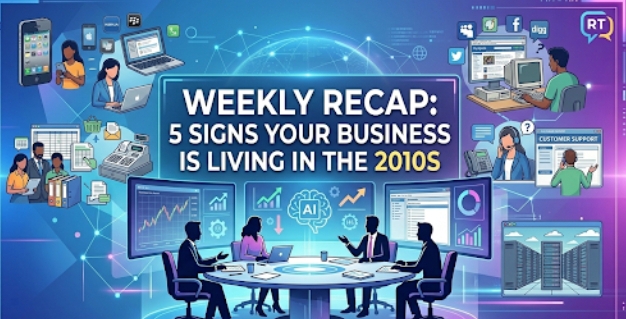
Weekly Recap: 5 Signs Your Business is Living in the 2010s
Posted on 27/02/2026 07:27:57
Audience: 128
Share with friends on:
In the fast-evolving business landscape of 2026, clinging to 2010s tactics feels like driving a Nokia 3310 on Lagos highways—charming nostalgia, but destined for the scrapheap. This week's recap spotlights five glaring signs your enterprise is stuck in that analog era, from rigid hierarchies to paper trails, drawing from viral X threads, FIRS audits, and CBN fintech reports. Spotting these red flags isn't defeat; it's your wake-up call to pivot before competitors armed with AI and blockchain lap you.
First sign: You're still drowning in spreadsheets and endless email chains. Back in 2010, Excel wizards ruled, but today's ops demand real-time dashboards like Google Workspace or Notion AI. Nigerian SMEs emailing invoices weekly? That's a cashflow killer—delays spike defaults by 30%, per Flutterwave data. If your team debates "reply all" etiquette instead of Slack huddles or collaborative tools, you're bleeding efficiency. Forward-thinkers use Zapier automations; laggards photocopy ledgers.
Paper processes scream second sign of 2010s inertia. Manual receipts, filed cabinets bulging in your Ibadan office? E-invoicing mandates from FIRS since 2024 make this not just outdated, but fined—up to ₦50,000 per violation. Digital twins via apps like Wave or QuickBooks scan and OCR everything, slashing admin time by 70%. Businesses printing contracts for signatures? DocuSign or HelloSign laughs them out; remote notarization is the norm, especially post-pandemic.
Your marketing fixates on billboards and flyers? Third sign you're decade-behind. 2010s loved outdoor ads blanketing Oshodi; now, 85% of Nigerian consumers discover brands via TikTok or Instagram Reels, Statista reports. No SEO, zero UGC campaigns, or AI-targeted Meta ads? You're invisible. Savvy Lagos startups A/B test with Midjourney visuals, hitting 10x ROI. If your "digital strategy" is a static Facebook page, refresh it—or watch Gen Z scroll past.
Fourth red flag: Isolated silos where departments hoard data like state secrets. 2010s silos bred turf wars; unified CRMs like HubSpot or Salesforce integrate sales, support, and inventory. In Nigeria's e-commerce boom, firms like Jumia thrive on omnichannel data lakes, predicting trends with AI. If your sales team blind-sends leads to ops without context, expect chaos. Cross-functional tools foster agility; echo chambers ensure stagnation.
Finally, fifth sign: No remote or hybrid workforce agility. The 2010s demanded 9-5 desk chains; 2026 celebrates async global teams via Zoom AI summaries and flexible tools like Asana. With Nigeria's youth eyeing abroad gigs, rigid offices lose talent—remote setups cut overheads by 40%, per Andela insights. If you're mandating commutes amid fuel hikes, or lack cybersecurity for BYOD, you're not scaling; you're shrinking your talent pool.
These signs aren't indictments but invitations to upgrade. Audit your ops this week: Ditch paper, automate workflows, go digital-first in marketing, break silos, and embrace flexibility. Nigerian disruptors like Paystack evolved from 2010s fintech seeds into unicorns by iterating relentlessly. Your business doesn't need a full reboot—just swap the flip phone for a smartphone. The 2020s reward adapters; the dinosaurs? They're museum exhibits. Time to level up.
First sign: You're still drowning in spreadsheets and endless email chains. Back in 2010, Excel wizards ruled, but today's ops demand real-time dashboards like Google Workspace or Notion AI. Nigerian SMEs emailing invoices weekly? That's a cashflow killer—delays spike defaults by 30%, per Flutterwave data. If your team debates "reply all" etiquette instead of Slack huddles or collaborative tools, you're bleeding efficiency. Forward-thinkers use Zapier automations; laggards photocopy ledgers.
Paper processes scream second sign of 2010s inertia. Manual receipts, filed cabinets bulging in your Ibadan office? E-invoicing mandates from FIRS since 2024 make this not just outdated, but fined—up to ₦50,000 per violation. Digital twins via apps like Wave or QuickBooks scan and OCR everything, slashing admin time by 70%. Businesses printing contracts for signatures? DocuSign or HelloSign laughs them out; remote notarization is the norm, especially post-pandemic.
Your marketing fixates on billboards and flyers? Third sign you're decade-behind. 2010s loved outdoor ads blanketing Oshodi; now, 85% of Nigerian consumers discover brands via TikTok or Instagram Reels, Statista reports. No SEO, zero UGC campaigns, or AI-targeted Meta ads? You're invisible. Savvy Lagos startups A/B test with Midjourney visuals, hitting 10x ROI. If your "digital strategy" is a static Facebook page, refresh it—or watch Gen Z scroll past.
Fourth red flag: Isolated silos where departments hoard data like state secrets. 2010s silos bred turf wars; unified CRMs like HubSpot or Salesforce integrate sales, support, and inventory. In Nigeria's e-commerce boom, firms like Jumia thrive on omnichannel data lakes, predicting trends with AI. If your sales team blind-sends leads to ops without context, expect chaos. Cross-functional tools foster agility; echo chambers ensure stagnation.
Finally, fifth sign: No remote or hybrid workforce agility. The 2010s demanded 9-5 desk chains; 2026 celebrates async global teams via Zoom AI summaries and flexible tools like Asana. With Nigeria's youth eyeing abroad gigs, rigid offices lose talent—remote setups cut overheads by 40%, per Andela insights. If you're mandating commutes amid fuel hikes, or lack cybersecurity for BYOD, you're not scaling; you're shrinking your talent pool.
These signs aren't indictments but invitations to upgrade. Audit your ops this week: Ditch paper, automate workflows, go digital-first in marketing, break silos, and embrace flexibility. Nigerian disruptors like Paystack evolved from 2010s fintech seeds into unicorns by iterating relentlessly. Your business doesn't need a full reboot—just swap the flip phone for a smartphone. The 2020s reward adapters; the dinosaurs? They're museum exhibits. Time to level up.
Kindly join discussion on this topic on:
} Share with friends on:Related Posts
- Conversational Keywords: Writing for Natural Language Processing
- Trade Resilience: Data on Front-Loaded Shipments and New Bilateral Trade Deals
- Venture Capital in 2026: The Shift from "Growth at All Costs" to "Unit Economics"
- What Is the Force Majeure Clause Released in Bahrain Amidst the US-Israeli-Iranian Conflict
- E-Commerce Integration: Taking Your Local Trade to a Global Audience
- Authoritative Content: How to Become a Primary Source for AI Models
- Interoperability: Connecting Private Blockchains with Public Liquidity
- Smart Cities or Gated Communities? The Social Impact of Tech-Driven Urban Planning
- Social Listening for ROI: How to Spot Market Trends Before They Break
- Agricultural Yields: Impact of Climate-Related Shocks on Global Food Security