A Specific Set of AI integration Guidelines for a Startup Fintech's Security Roadmap
Posted on 17/02/2026 05:45:25
Audience: 131
Share with friends on:
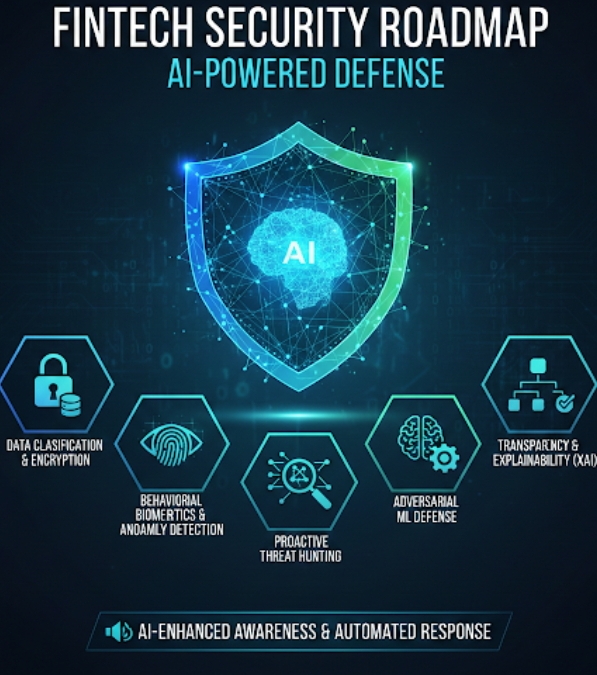
Integrating artificial intelligence into a startup fintech’s security roadmap requires a foundational commitment to "Security by Design," where AI is not merely an add-on but a core defensive layer. For a burgeoning firm, the first guideline must focus on the automated classification and protection of sensitive financial data. By deploying machine learning models to identify and tag Personally Identifiable Information (PII) across distributed databases, the startup can enforce dynamic encryption and access controls. This ensures that even as the company scales its user base, the data remains compartmentalized, reducing the blast radius of any potential internal or external breach.
Building upon this data-centric foundation, the roadmap must prioritize the implementation of AI-driven behavioral biometrics and anomaly detection for identity and access management. Unlike static passwords or even traditional multi-factor authentication, AI can analyze a user’s unique interaction patterns—such as typing rhythm, device orientation, and habitual login locations—to create a continuous authentication loop. This guideline transforms security from a one-time gatekeeper into a persistent monitor, allowing the fintech to flag account takeover attempts in real-time without compromising the seamless user experience that is vital for early-stage growth.
The third pillar of this roadmap involves the proactive hunting of threats through the integration of AI with the startup’s Security Operations Center (SOC). In a landscape where "zero-day" exploits are increasingly common, the guidelines should mandate the use of predictive analytics to scan network traffic for subtle deviations that human analysts might overlook. By training models on global threat intelligence feeds, the startup can transition from a reactive posture to a predictive one, automatically neutralizing suspicious IPs or isolating compromised containers before a full-scale attack can manifest.
Furthermore, as the startup utilizes its own AI models for credit scoring or fraud detection, it must establish strict guidelines for adversarial machine learning defense. This means the security roadmap must include "model hardening" techniques to prevent bad actors from manipulating input data to trick the AI—a tactic known as "poisoning." For a fintech, where an algorithmic error can lead to significant financial loss or regulatory non-compliance, ensuring the integrity of the AI models themselves is just as critical as securing the servers they run on.
Transparency and explainability serve as the fifth guideline, bridging the gap between advanced technology and regulatory scrutiny. The security roadmap should dictate that any AI used in security decision-making—such as blocking a transaction—must be "explainable" (XAI). This ensures that the startup can provide clear audit trails to regulators and maintain trust with its customers. If an AI system flags a high-value transfer as fraudulent, the security team must be able to verify the specific logic used, ensuring the system remains unbiased and compliant with global financial standards.
Finally, the roadmap must address the human element through AI-enhanced security awareness and automated incident response simulations. By using AI to craft hyper-personalized phishing simulations tailored to specific departments, the startup can effectively train its staff against the most sophisticated social engineering tactics. Concurrently, the guidelines should facilitate the creation of automated "playbooks" that execute immediate remedial actions during an incident. This holistic approach ensures that the fintech’s security posture is not just a collection of tools, but a resilient, self-evolving ecosystem capable of defending the frontier of digital finance.
Building upon this data-centric foundation, the roadmap must prioritize the implementation of AI-driven behavioral biometrics and anomaly detection for identity and access management. Unlike static passwords or even traditional multi-factor authentication, AI can analyze a user’s unique interaction patterns—such as typing rhythm, device orientation, and habitual login locations—to create a continuous authentication loop. This guideline transforms security from a one-time gatekeeper into a persistent monitor, allowing the fintech to flag account takeover attempts in real-time without compromising the seamless user experience that is vital for early-stage growth.
The third pillar of this roadmap involves the proactive hunting of threats through the integration of AI with the startup’s Security Operations Center (SOC). In a landscape where "zero-day" exploits are increasingly common, the guidelines should mandate the use of predictive analytics to scan network traffic for subtle deviations that human analysts might overlook. By training models on global threat intelligence feeds, the startup can transition from a reactive posture to a predictive one, automatically neutralizing suspicious IPs or isolating compromised containers before a full-scale attack can manifest.
Furthermore, as the startup utilizes its own AI models for credit scoring or fraud detection, it must establish strict guidelines for adversarial machine learning defense. This means the security roadmap must include "model hardening" techniques to prevent bad actors from manipulating input data to trick the AI—a tactic known as "poisoning." For a fintech, where an algorithmic error can lead to significant financial loss or regulatory non-compliance, ensuring the integrity of the AI models themselves is just as critical as securing the servers they run on.
Transparency and explainability serve as the fifth guideline, bridging the gap between advanced technology and regulatory scrutiny. The security roadmap should dictate that any AI used in security decision-making—such as blocking a transaction—must be "explainable" (XAI). This ensures that the startup can provide clear audit trails to regulators and maintain trust with its customers. If an AI system flags a high-value transfer as fraudulent, the security team must be able to verify the specific logic used, ensuring the system remains unbiased and compliant with global financial standards.
Finally, the roadmap must address the human element through AI-enhanced security awareness and automated incident response simulations. By using AI to craft hyper-personalized phishing simulations tailored to specific departments, the startup can effectively train its staff against the most sophisticated social engineering tactics. Concurrently, the guidelines should facilitate the creation of automated "playbooks" that execute immediate remedial actions during an incident. This holistic approach ensures that the fintech’s security posture is not just a collection of tools, but a resilient, self-evolving ecosystem capable of defending the frontier of digital finance.
Kindly join discussion on this topic on:
} Share with friends on:Related Posts
- Conversational Keywords: Writing for Natural Language Processing
- Trade Resilience: Data on Front-Loaded Shipments and New Bilateral Trade Deals
- Venture Capital in 2026: The Shift from "Growth at All Costs" to "Unit Economics"
- What Is the Force Majeure Clause Released in Bahrain Amidst the US-Israeli-Iranian Conflict
- E-Commerce Integration: Taking Your Local Trade to a Global Audience
- Authoritative Content: How to Become a Primary Source for AI Models
- Interoperability: Connecting Private Blockchains with Public Liquidity
- Smart Cities or Gated Communities? The Social Impact of Tech-Driven Urban Planning
- Social Listening for ROI: How to Spot Market Trends Before They Break
- Agricultural Yields: Impact of Climate-Related Shocks on Global Food Security