Fintech, Renewable Energy and More: Emerging Opportunities in Nigerian Economy
Posted on 01/02/2026 13:05:11
Share with friends on:
Nigeria’s economic landscape in 2026 is defined by a strategic shift from speculative growth to high-utility innovation, offering a fertile ground for entrepreneurs who can navigate the country's unique macroeconomic realities.
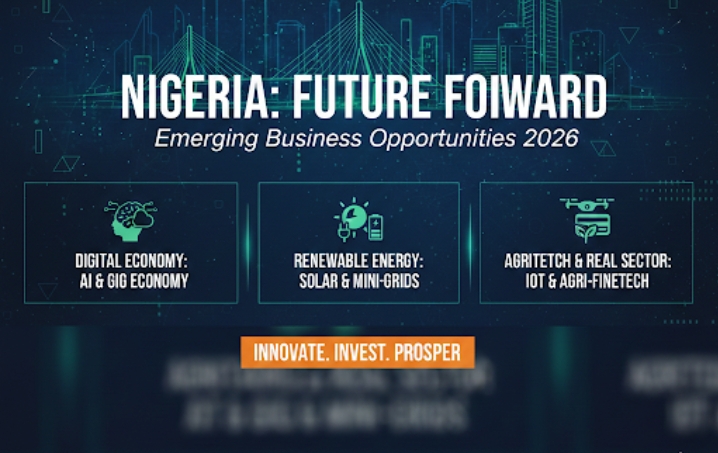
The digital economy, projected to reach over $18 billion this year, has matured beyond basic payment solutions into a sophisticated ecosystem where artificial intelligence and hybrid cloud computing are now mainstream. Businesses that integrate AI into supply chain logistics, customer insight analytics, and fraud detection are gaining a decisive edge.
Moreover, the rise of the "gig economy"—which now contributes billions to the national GDP—has opened niche markets for startups focusing on worker-centric services such as micro-insurance, specialized payment systems, and digital upskilling programs tailored for millions of freelancers and delivery partners across the country.
Energy remains the most critical frontier for investment, especially as Nigeria transitions toward a more decentralized and sustainable power framework. With the launch of the 2026 Gas Master Plan and a significant decline in global solar-PV module prices, the renewable energy sector is currently outperforming traditional fintech in terms of growth acceleration.
Opportunities are particularly abundant in the "Distributed Access through Renewable Energy Scale-up" (DARES) initiative, which aims to provide clean electricity to over 17 million Nigerians. Entrepreneurs are finding success by focusing on solar home systems, mini-grids for underserved rural areas, and "battery-as-a-service" models for electric mobility, which is rapidly gaining traction in major urban centers like Lagos and Abuja as a hedge against rising fuel costs.
In the agricultural and real sector, the focus has shifted toward industrialization and precision. Nigeria has emerged as one of the fastest-growing agritech hubs, with startups now leveraging IoT and drone technology to optimize crop yields and manage livestock. The most lucrative opportunities lie in the "agri-fintech" space, where digital platforms bridge the gap between smallholder farmers and institutional credit, and in localized food processing that reduces post-harvest losses.
Additionally, as the middle class seeks convenience amidst a busy urban lifestyle, the "Quick-Commerce" and on-demand delivery sectors continue to expand, creating a demand for robust cold-chain logistics and specialized e-commerce subscription models for everything from office supplies to healthy meal kits.
The digital economy, projected to reach over $18 billion this year, has matured beyond basic payment solutions into a sophisticated ecosystem where artificial intelligence and hybrid cloud computing are now mainstream. Businesses that integrate AI into supply chain logistics, customer insight analytics, and fraud detection are gaining a decisive edge.
Moreover, the rise of the "gig economy"—which now contributes billions to the national GDP—has opened niche markets for startups focusing on worker-centric services such as micro-insurance, specialized payment systems, and digital upskilling programs tailored for millions of freelancers and delivery partners across the country.
Energy remains the most critical frontier for investment, especially as Nigeria transitions toward a more decentralized and sustainable power framework. With the launch of the 2026 Gas Master Plan and a significant decline in global solar-PV module prices, the renewable energy sector is currently outperforming traditional fintech in terms of growth acceleration.
Opportunities are particularly abundant in the "Distributed Access through Renewable Energy Scale-up" (DARES) initiative, which aims to provide clean electricity to over 17 million Nigerians. Entrepreneurs are finding success by focusing on solar home systems, mini-grids for underserved rural areas, and "battery-as-a-service" models for electric mobility, which is rapidly gaining traction in major urban centers like Lagos and Abuja as a hedge against rising fuel costs.
In the agricultural and real sector, the focus has shifted toward industrialization and precision. Nigeria has emerged as one of the fastest-growing agritech hubs, with startups now leveraging IoT and drone technology to optimize crop yields and manage livestock. The most lucrative opportunities lie in the "agri-fintech" space, where digital platforms bridge the gap between smallholder farmers and institutional credit, and in localized food processing that reduces post-harvest losses.
Additionally, as the middle class seeks convenience amidst a busy urban lifestyle, the "Quick-Commerce" and on-demand delivery sectors continue to expand, creating a demand for robust cold-chain logistics and specialized e-commerce subscription models for everything from office supplies to healthy meal kits.
Kindly join discussion on this topic on:
Related Posts
- Growing with the New Frontiers in Cryptocurrency
- From Infra Boom to Fiscal Shifts: Lagos Nigeria Today
- From Immigration Crackdown to Diplomatic Renewal, USA Today
- Among others, 'Are you dead' App Trends in China
- Expected EPL Table Shakeup As Battles for Survival Continue on Matchweek24
- PayPal Reentering Nigeria's Economy After Two Decades of Labelling
- ADC and the Bank on Unreliable Support-Base
- Social Media Platforms in 2026 and Business Opportunities in Them
- UEFA: From Mourinho's Magic to Arsenal's Historic Moments through the Night of Football Drama
- Agboola Ajayi's Return of a Prodigal Son to APC