PayPal Reentering Nigeria's Economy After Two Decades of Labelling
Posted on 30/01/2026 06:19:15
Share with friends on:
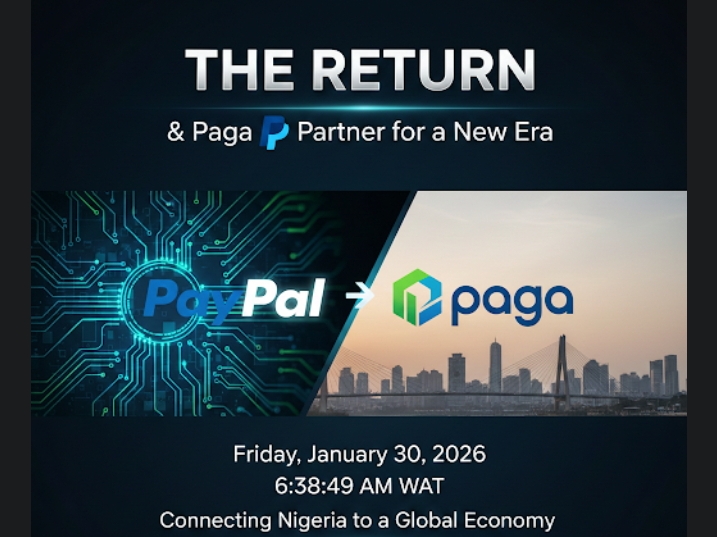
The recent announcement of PayPal's full return to Nigeria through a strategic partnership with Paga in January 2026 has ignited a fierce debate that is as much about financial sovereignty as it is about economic opportunity.
For nearly two decades, PayPal maintained a one-sided relationship with Africa’s largest economy, allowing Nigerians to send money out but blocking them from receiving funds—a policy that effectively "ghosted" an entire generation of digital entrepreneurs and freelancers. During this long winter of exclusion, the Nigerian fintech ecosystem did not wait for a savior; instead, it blossomed into a global powerhouse, with homegrown giants like Paystack, Flutterwave, and Paga building the very infrastructure that PayPal now seeks to utilize.
Critics argue that PayPal's sudden interest is less about "helping" Nigeria and more about corporate survival, as the company faces stagnating growth in Western markets and cannot afford to ignore a digital payments market that processed over ₦1 quadrillion in 2024.
The merits of this re-entry are primarily rooted in global interoperability and the practical needs of the gig economy. For a Nigerian freelancer, the ability to link a PayPal account to a Paga wallet and withdraw in Naira provides a bridge to over 400 million global users who view PayPal as the "gold standard" of trust. This integration could potentially lower the barriers for small businesses to sell globally and may attract more foreign direct investment by channeling earnings into the formal banking system, thereby supporting currency stability.
Furthermore, the partnership model—where PayPal embeds itself into local rails rather than operating in a vacuum—suggests a newfound respect for local compliance and regulatory maturity that was absent in 2004.
However, the demerits and deep-seated skepticism are equally compelling, centered on a massive trust deficit and the "sincerity" of a company that once branded an entire nation as a fraud risk. The primary concern for many remains the fate of funds seized or "frozen" during the two-decade blockade; without a clear roadmap for restitution or an apology for the economic opportunities lost, many Nigerians view this return as opportunistic "market tapping."
There is a rational fear that PayPal remains an "efficient account-freezing machine," and without ironclad guarantees from both the company and the Nigerian government, users risk having their livelihoods held hostage once again. Ultimately, while PayPal brings a massive network, it is entering a sophisticated party it once snubbed—a party hosted by resilient local innovators who proved that Nigeria could not only survive without PayPal but thrive.
Whether this move represents a sincere olive branch or a Trojan horse for market dominance remains to be seen, but for many, the scars of 20 years will not be healed by a simple press release.
For nearly two decades, PayPal maintained a one-sided relationship with Africa’s largest economy, allowing Nigerians to send money out but blocking them from receiving funds—a policy that effectively "ghosted" an entire generation of digital entrepreneurs and freelancers. During this long winter of exclusion, the Nigerian fintech ecosystem did not wait for a savior; instead, it blossomed into a global powerhouse, with homegrown giants like Paystack, Flutterwave, and Paga building the very infrastructure that PayPal now seeks to utilize.
Critics argue that PayPal's sudden interest is less about "helping" Nigeria and more about corporate survival, as the company faces stagnating growth in Western markets and cannot afford to ignore a digital payments market that processed over ₦1 quadrillion in 2024.
The merits of this re-entry are primarily rooted in global interoperability and the practical needs of the gig economy. For a Nigerian freelancer, the ability to link a PayPal account to a Paga wallet and withdraw in Naira provides a bridge to over 400 million global users who view PayPal as the "gold standard" of trust. This integration could potentially lower the barriers for small businesses to sell globally and may attract more foreign direct investment by channeling earnings into the formal banking system, thereby supporting currency stability.
Furthermore, the partnership model—where PayPal embeds itself into local rails rather than operating in a vacuum—suggests a newfound respect for local compliance and regulatory maturity that was absent in 2004.
However, the demerits and deep-seated skepticism are equally compelling, centered on a massive trust deficit and the "sincerity" of a company that once branded an entire nation as a fraud risk. The primary concern for many remains the fate of funds seized or "frozen" during the two-decade blockade; without a clear roadmap for restitution or an apology for the economic opportunities lost, many Nigerians view this return as opportunistic "market tapping."
There is a rational fear that PayPal remains an "efficient account-freezing machine," and without ironclad guarantees from both the company and the Nigerian government, users risk having their livelihoods held hostage once again. Ultimately, while PayPal brings a massive network, it is entering a sophisticated party it once snubbed—a party hosted by resilient local innovators who proved that Nigeria could not only survive without PayPal but thrive.
Whether this move represents a sincere olive branch or a Trojan horse for market dominance remains to be seen, but for many, the scars of 20 years will not be healed by a simple press release.
Kindly join discussion on this topic on:
Related Posts
- ADC and the Bank on Unreliable Support-Base
- Social Media Platforms in 2026 and Business Opportunities in Them
- UEFA: From Mourinho's Magic to Arsenal's Historic Moments through the Night of Football Drama
- Agboola Ajayi's Return of a Prodigal Son to APC
- Osun LG Crisis Enters New Phase As Senior Staff Become Tool of Warfare
- UEFA Pundit: 18 Final Groups Matches, Same Start Time
- EPL Matchday 23: Drama as Arsenal, Liverpool Go South
- Torchlight on Tinubu's Reversal of Appointments
- Fubara's Impeachment Process Locked
- Veto Power or Stalled: Options Amid Fubara's Impeachment Update