Among others, 'Are you dead' App Trends in China
Posted on 31/01/2026 23:48:44
Share with friends on:
As China navigates the opening weeks of 2026, the national discourse is dominated by a complex interplay of economic recalibration, social shifts among the youth, and a high-stakes geopolitical landscape.
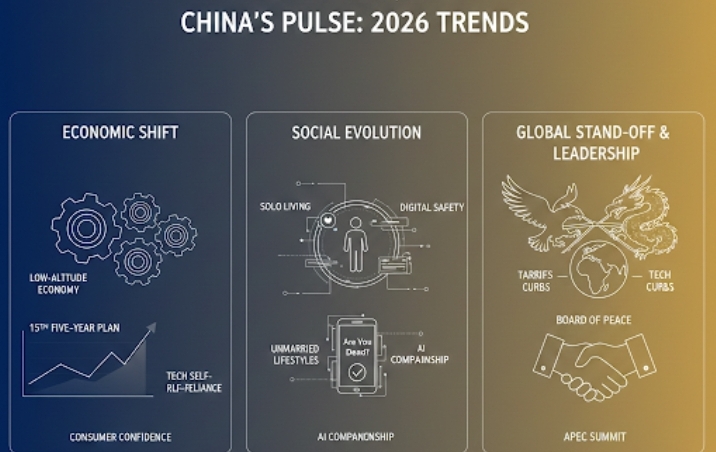
The most pressing issue at the heart of the domestic agenda is the launch of the 15th Five-Year Plan (2026–2030), which marks a definitive pivot toward "high-quality development." Facing a cooling GDP growth rate and a persistent property market slump, policymakers are aggressively prioritizing technological self-reliance and the "low-altitude economy"—a burgeoning sector focused on commercial drone logistics and electric vertical takeoff vehicles. However, the government's push for industrial upgrading is met with the reality of weak consumer confidence; while services like domestic tourism and concerts are booming, there is a marked hesitation among the public to spend on durable goods, leading to a year defined by economic consolidation rather than the explosive growth of decades past.
Parallel to these structural shifts is a poignant social phenomenon: the rise of the "solo living" economy and its accompanying digital safety culture. With over 200 million one-person households in China, social media platforms like Weibo have recently seen the viral success of apps like "Are You Dead?"—a dark but practical tool designed to check on individuals living alone.
This trend reflects a broader generational shift where young adults, facing intense professional pressure and a high cost of living, are increasingly embracing unmarried lifestyles. This "pressured generation" is moving away from traditional family structures, prompting both a market for niche AI-driven companionship and a serious public debate about social isolation and the long-term demographic challenges of an aging, shrinking workforce.
On the global stage, China’s primary focus is navigating a "strategic paradox" of geopolitical friction and global leadership. The return of Donald Trump to the U.S. presidency for a second term has reignited intense trade tensions, with 2026 seeing the first major wave of new tariffs and tech restrictions.
Chinese public sentiment is currently highly reactive to these external shocks, particularly the impact on the domestic semiconductor and electric vehicle industries.
Simultaneously, Beijing is projecting a more confident image abroad, framing itself as a stabilizer in a chaotic world through initiatives like the "Board of Peace" and hosting major summits like APEC. This dual reality—of being "on edge" domestically due to trade wars while attempting to lead global governance—forms the third and perhaps most volatile pillar of China's current national consciousness.
The most pressing issue at the heart of the domestic agenda is the launch of the 15th Five-Year Plan (2026–2030), which marks a definitive pivot toward "high-quality development." Facing a cooling GDP growth rate and a persistent property market slump, policymakers are aggressively prioritizing technological self-reliance and the "low-altitude economy"—a burgeoning sector focused on commercial drone logistics and electric vertical takeoff vehicles. However, the government's push for industrial upgrading is met with the reality of weak consumer confidence; while services like domestic tourism and concerts are booming, there is a marked hesitation among the public to spend on durable goods, leading to a year defined by economic consolidation rather than the explosive growth of decades past.
Parallel to these structural shifts is a poignant social phenomenon: the rise of the "solo living" economy and its accompanying digital safety culture. With over 200 million one-person households in China, social media platforms like Weibo have recently seen the viral success of apps like "Are You Dead?"—a dark but practical tool designed to check on individuals living alone.
This trend reflects a broader generational shift where young adults, facing intense professional pressure and a high cost of living, are increasingly embracing unmarried lifestyles. This "pressured generation" is moving away from traditional family structures, prompting both a market for niche AI-driven companionship and a serious public debate about social isolation and the long-term demographic challenges of an aging, shrinking workforce.
On the global stage, China’s primary focus is navigating a "strategic paradox" of geopolitical friction and global leadership. The return of Donald Trump to the U.S. presidency for a second term has reignited intense trade tensions, with 2026 seeing the first major wave of new tariffs and tech restrictions.
Chinese public sentiment is currently highly reactive to these external shocks, particularly the impact on the domestic semiconductor and electric vehicle industries.
Simultaneously, Beijing is projecting a more confident image abroad, framing itself as a stabilizer in a chaotic world through initiatives like the "Board of Peace" and hosting major summits like APEC. This dual reality—of being "on edge" domestically due to trade wars while attempting to lead global governance—forms the third and perhaps most volatile pillar of China's current national consciousness.
Kindly join discussion on this topic on:
Related Posts
- Expected EPL Table Shakeup As Battles for Survival Continue on Matchweek24
- PayPal Reentering Nigeria's Economy After Two Decades of Labelling
- ADC and the Bank on Unreliable Support-Base
- Social Media Platforms in 2026 and Business Opportunities in Them
- UEFA: From Mourinho's Magic to Arsenal's Historic Moments through the Night of Football Drama
- Agboola Ajayi's Return of a Prodigal Son to APC
- Osun LG Crisis Enters New Phase As Senior Staff Become Tool of Warfare
- UEFA Pundit: 18 Final Groups Matches, Same Start Time
- EPL Matchday 23: Drama as Arsenal, Liverpool Go South
- Torchlight on Tinubu's Reversal of Appointments