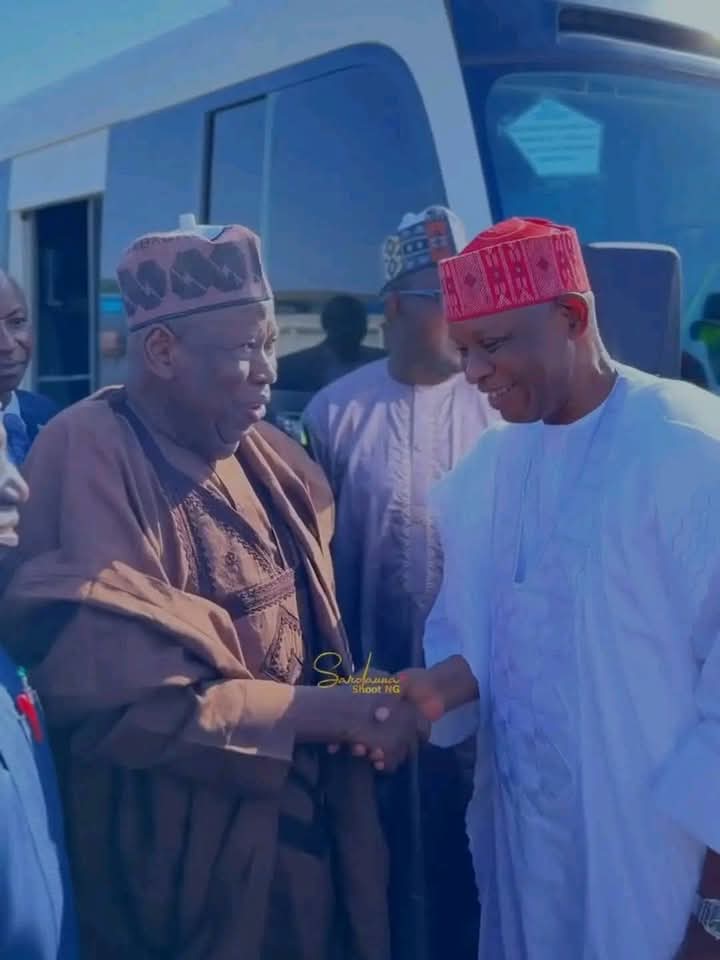
Kano Defection: The Most Pressing Issue Remains Unresolved
Posted on 24/01/2026 16:48:18
Share with friends on:
The political landscape of Kano State, long defined by the volatile rivalry between Senator Rabiu Musa Kwankwaso and Dr. Abdullahi Umar Ganduje, is currently undergoing a seismic shift that threatens to redefine the traditional institution of the Emirate. The potential defection of Governor Abba Kabir Yusuf from the New Nigeria Peoples Party (NNPP) to the All Progressives Congress (APC) is more than a mere change of party logo; it is a calculated "give and take" arrangement designed to harmonize the interests of the state and federal governments. Central to this deal is the reported exit of Ganduje from his role as APC National Chairman—a strategic move that prevents the awkward scenario of Kwankwaso, the senior political mentor, being subordinate to his former deputy within the party hierarchy. However, as these political giants move toward a fragile truce, the most pressing casualty of their past warfare—the Kano throne—remains occupied by two claimants, each possessing deep-seated connections and formidable influence.
The fate of the "authentic" Emir now rests at the intersection of political expediency and judicial finality. Muhammadu Sanusi second, the 16th Emir, remains the intellectual powerhouse and global icon whose restoration by Governor Yusuf was seen as the ultimate vindication for the Kwankwasiyya movement. Sanusi’s influence transcends the palace; his connections within the global financial elite and his outspoken nature on socio-economic reforms make him a valuable asset for any government seeking international prestige. On the other hand, Alhaji Aminu Ado Bayero, the 15th Emir, represents the deep-rooted traditional continuity of the late Hadoh Bayelroh’s legacy. His quiet diplomacy and favor with the APC-led federal government—symbolized by the heavy security protection he has enjoyed at the Nasarawa mini-palace—make him a figure of stability for those wary of Sanusi’s radicalism.
In an APC-merged Kano, the resolution will likely favor the "Kano State Emirate Council Law 2024," which sought to return the state to a single-emirate system. While Ganduje originally split the emirate to diminish Kwankwaso’s influence, his resignation and the subsequent political alignment may necessitate a "win-win" compromise that stabilizes the state. Historically, traditional rulers in Nigeria are at the mercy of the sitting governor; therefore, if Governor Yusuf remains in power and successfully integrates into the APC, Sanusee Lamido Sanusi holds the structural advantage as the recognized Emir under current state law. However, to appease Ganduje’s loyalists and the Ado Bayero family, a dignified exit or a redefined role for the deposed emirs may be the price of peace. Ultimately, the "authentic" Emir will be the one who can bridge the gap between Kwankwaso’s grassroots populism and the federal government’s need for a peaceful, unified Kano heading into the 2027 elections.
The fate of the "authentic" Emir now rests at the intersection of political expediency and judicial finality. Muhammadu Sanusi second, the 16th Emir, remains the intellectual powerhouse and global icon whose restoration by Governor Yusuf was seen as the ultimate vindication for the Kwankwasiyya movement. Sanusi’s influence transcends the palace; his connections within the global financial elite and his outspoken nature on socio-economic reforms make him a valuable asset for any government seeking international prestige. On the other hand, Alhaji Aminu Ado Bayero, the 15th Emir, represents the deep-rooted traditional continuity of the late Hadoh Bayelroh’s legacy. His quiet diplomacy and favor with the APC-led federal government—symbolized by the heavy security protection he has enjoyed at the Nasarawa mini-palace—make him a figure of stability for those wary of Sanusi’s radicalism.
In an APC-merged Kano, the resolution will likely favor the "Kano State Emirate Council Law 2024," which sought to return the state to a single-emirate system. While Ganduje originally split the emirate to diminish Kwankwaso’s influence, his resignation and the subsequent political alignment may necessitate a "win-win" compromise that stabilizes the state. Historically, traditional rulers in Nigeria are at the mercy of the sitting governor; therefore, if Governor Yusuf remains in power and successfully integrates into the APC, Sanusee Lamido Sanusi holds the structural advantage as the recognized Emir under current state law. However, to appease Ganduje’s loyalists and the Ado Bayero family, a dignified exit or a redefined role for the deposed emirs may be the price of peace. Ultimately, the "authentic" Emir will be the one who can bridge the gap between Kwankwaso’s grassroots populism and the federal government’s need for a peaceful, unified Kano heading into the 2027 elections.
Kindly join discussion on this topic on:
Related Posts
- Fubara's Impeachment Process Locked
- Veto Power or Stalled: Options Amid Fubara's Impeachment Update
- 1980s to Date: Moments Alaafin and Olubadan Clashed Publicly
- Forecast As Ayra Starr's New Album Features Jay Z and Beyoncé
- 40 Years As President: Aerial Report from Ugandan Presidential Election
- Forgotten UEFA Giants: Frequently Qualified Clubs with No Trophy
- Fubara's Impeachment: Legislation vs Judiciary
- Fela vs Wizkid: Inside the Wor for Afrobeat Greatest
- Inside Osun with 8,452 Govt-backed Ghost Workers
- Much About Chagoury's GCON Conferment By Tinubu